
Your trusted destination for CME, CPD & Medical Education across the Middle East.
Weill Cornell Medical College
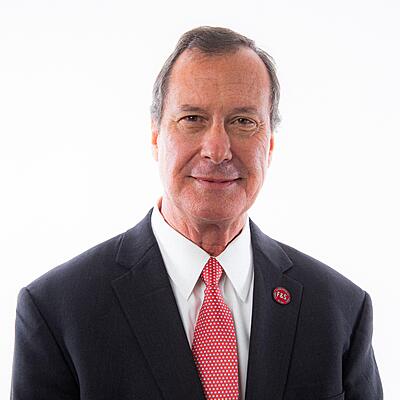
Dr. Peter Schlegel is a senior urologist and reproductive-medicine specialist associated with Weill Cornell Medicine. He is internationally recognized for his work in male infertility, male reproductive medicine, microsurgery and urologic oncology. He previously served as Chairman of the Department of Urology at Weill Cornell Medicine and Urologist-in-Chief at NewYork-Presbyterian/Weill Cornell Medical Center. His research and clinical work have included sperm retrieval techniques and the treatment of male-factor infertility. He joined Weill Cornell's faculty in 1991 after completing urology residency at Johns Hopkins.
Professor Peter N. Schlegel is an internationally recognized American urologist and reproductive medicine specialist whose work has significantly influenced the diagnosis and treatment of male infertility. His clinical and research interests include reproductive microsurgery, sperm retrieval, genetic causes of infertility, hormonal disorders, prostate cancer, and the relationship between male infertility treatment and assisted reproductive technologies.
Dr. Schlegel received his medical degree from the University of Massachusetts Medical School in 1983. He completed general surgery residency training at Johns Hopkins Hospital from 1983 to 1985, followed by urology residency training from 1985 to 1989. He then pursued fellowship and research training at NewYork Hospital-Cornell Medical Center and associated research institutions.
He joined the Cornell medical faculty in 1991 and progressively assumed major clinical, academic, and administrative responsibilities. In 2001, he became acting chairman of the Department of Urology. In 2004, he was appointed chairman of the department and Urologist-in-Chief at NewYork-Presbyterian Hospital/Weill Cornell Medical Center.
A major focus of Dr. Schlegel's career has been developing techniques to help men with severe infertility father biological children. He is particularly associated with microdissection testicular sperm extraction (micro-TESE), a surgical technique used to retrieve sperm in selected men with non-obstructive azoospermia, a condition in which sperm are absent from the ejaculate because of impaired sperm production.
His research has also helped advance understanding of genetic abnormalities associated with male infertility and the use of genetic evaluation to inform clinical treatment. In addition, he has contributed to research on hormonal treatment for male reproductive disorders and clinical trials involving prostate cancer therapies.
Dr. Schlegel has authored more than 300 peer-reviewed scientific publications, alongside numerous book chapters and reviews. His work has appeared in leading urology and reproductive medicine publications, and he has served in editorial and leadership roles across professional organizations.
After a long career at Weill Cornell Medicine, Dr. Schlegel left his affiliation with the institution and NewYork-Presbyterian Hospital in May 2024. His professional career remains notable for its contributions to reproductive urology, clinical research, surgical innovation, and specialist education.
Dr. Schlegel developed and published techniques for microdissection testicular sperm extraction, which allows surgeons to identify and retrieve sperm-producing tissue in selected men with non-obstructive azoospermia. The approach has become widely used in reproductive urology.
His clinical research has helped define the relationship between genetic abnormalities, sperm production, sperm retrieval, and reproductive treatment outcomes. This work has contributed to improved evaluation and treatment planning for men with severe infertility.
Dr. Schlegel contributed to research on the anatomical basis of nerve-sparing prostatectomy, a surgical approach intended to remove prostate cancer while preserving urinary and sexual function when clinically appropriate.
He has investigated hormonal abnormalities associated with male infertility and developed treatment approaches for selected men with impaired testosterone production.
With more than 300 peer-reviewed publications, Dr. Schlegel has contributed extensively to scientific literature on reproductive urology, male infertility, microsurgery, hormonal therapy, and urologic oncology.
Through his faculty appointments and departmental leadership at Weill Cornell Medicine, he contributed to medical education, surgical training, clinical research, and the development of urology services.
He has served as president of several professional societies, including the American Society for Reproductive Medicine, the Society for Male Reproduction and Urology, and the Society for Reproductive Surgeons.
Middle East Fertility Society (MEFS)
Middle East Fertility Society (MEFS)

dmg events
dmg events