
Your trusted destination for CME, CPD & Medical Education across the Middle East.
King Abdulaziz Medical City, Saudi Arabia
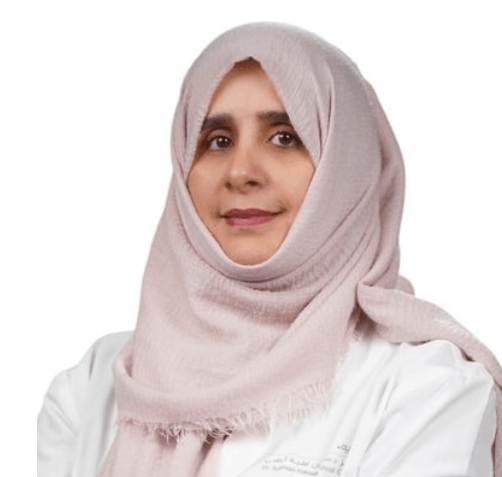
Dr. Reem M. Alamoudi, MD, MHSc, FACP is a Saudi Consultant Endocrinologist and Diabetes Specialist based in Jeddah, Saudi Arabia. She is affiliated with the Department of Medicine at King Abdulaziz Medical City, King Saud bin Abdulaziz University for Health Sciences (KSAU-HS), and the King Abdullah International Medical Research Center (KAIMRC). She is also listed as a Consultant in Endocrinology and Diabetes at Dr. Soliman Fakeeh Hospital, Jeddah.
Dr. Alamoudi holds an MD/MBBS, a Master of Health Sciences (MHSc), and is a Fellow of the American College of Physicians (FACP). Her professional training has focused on internal medicine, endocrinology and diabetes.
Her clinical expertise includes:
Dr. Alamoudi has developed a strong research profile, particularly in diabetes management during Ramadan. She has participated in multicenter and international research examining how people with diabetes can safely manage fasting, insulin treatment, glucose monitoring and hypoglycemia risk.
A notable contribution was the DaR Global Survey, published in Diabetes Research and Clinical Practice, which examined Ramadan fasting among people with type 1 diabetes during the COVID-19 pandemic. Dr. Alamoudi was one of the study's investigators and was affiliated with King Saud bin Abdulaziz University for Health Sciences in Jeddah.
She has also contributed to regional expert recommendations on continuous glucose monitoring in Type 2 diabetes in the Arab Gulf region, published in 2025.
In 2025, Dr. Alamoudi was the corresponding author of a randomized crossover trial investigating the effect of whey-protein consumption on hypoglycemia risk in people with Type 1 diabetes fasting during Ramadan. The study was conducted through King Abdulaziz Medical City, KSAU-HS and KAIMRC in Jeddah.
In 2026, she was a lead author of a multicenter randomized controlled trial examining the timing of levothyroxine administration during Ramadan. The study included 303 participants from three Saudi cities and found that both predawn and pre-Iftar dosing maintained thyroid stability.
She also contributed to 2026 research involving continuous glucose monitoring and glycemic management during Ramadan, presented through the American Diabetes Association's Scientific Sessions.
University of British Colombia,Vancouver, BC, Canada, 2008.
University of British Colombia, Vancouver, BC, Canada, 2007.
2004.
2004.
Gulf Association of Endocrinology & Diabetes (GAED)
Gulf Association of Endocrinology & Diabetes (GAED)