
Your trusted destination for CME, CPD & Medical Education across the Middle East.
King Faisal Specialist Hospital and Research Centre (KFSHRC)
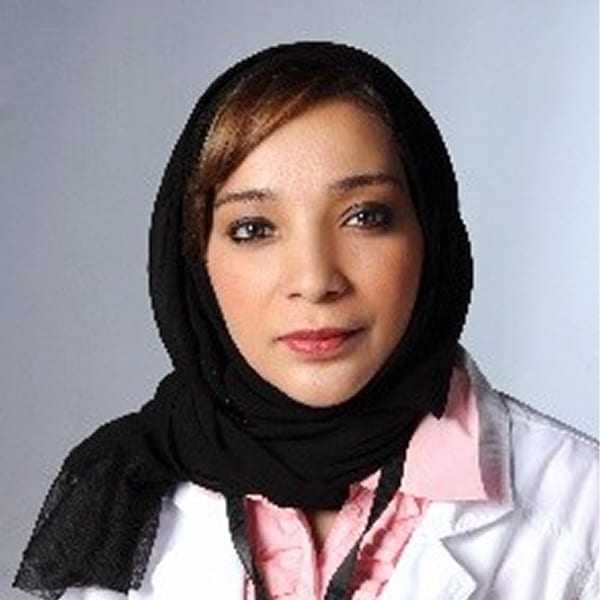
Dr. Hamsa T. Tayeb is a Saudi Arabian molecular virologist, microbiology researcher, and scientific leader specializing in infectious diseases, molecular diagnostics, microbial genomics, and metagenomics. Her research focuses on identifying infectious agents, investigating antimicrobial resistance, and applying molecular and genomic technologies to improve the diagnosis and surveillance of infectious diseases.
Dr. Tayeb completed her doctoral studies in Molecular Infectious Diseases at the University of Surrey in the United Kingdom in 2008. Following her academic training, she developed her research career in Saudi Arabia, working in medical research and laboratory science, including at the King Faisal Specialist Hospital and Research Centre (KFSHRC) in Riyadh.
Her research has addressed a broad range of infectious diseases, including viral gastroenteritis in children, antibiotic-resistant bacteria, and emerging infectious pathogens. She has contributed to studies investigating enteric viruses in Saudi pediatric patients, the molecular epidemiology of human astrovirus and rotavirus infections, and the genetic characteristics of drug-resistant bacterial organisms.
A major aspect of her work is the application of advanced molecular techniques to clinical microbiology. Her expertise includes polymerase chain reaction (PCR), genotyping, molecular virology, next-generation sequencing (NGS), and metagenomic analysis. These approaches help researchers identify pathogens, characterize their genetic profiles, and investigate infections that may be difficult to diagnose using conventional laboratory methods.
Dr. Tayeb has also contributed to research on antimicrobial resistance, including studies involving multidrug-resistant bacterial pathogens in hospital settings. Her more recent work has explored the use of metagenomic sequencing to investigate hospital outbreaks and support genomic surveillance, infection prevention, and precision microbiology.
In addition to her research activities, Dr. Tayeb has participated in scientific peer review, editorial work, collaborative research projects, and international scientific meetings. Her professional contributions reflect an interdisciplinary approach that brings together molecular biology, clinical microbiology, genomics, and infectious disease research.
2000–2008 — Advanced studies at the University of Surrey
Pursued higher education and doctoral research at the University of Surrey School of Biomedical and Molecular Sciences in Guildford, United Kingdom, specializing in Molecular Infectious Diseases. She completed her PhD in 2008.
2008 — Research on viral infections in children
Co-authored research on enteric viruses associated with pediatric diarrhea in Saudi Arabia. This work contributed to understanding the distribution of viral pathogens responsible for gastrointestinal infections in children.
2009 onward — Research career in Saudi Arabia
Became associated with medical research at Saudi healthcare and research institutions, including the National Guard Health Affairs research environment. Her work focused on molecular virology, infectious diseases, and laboratory-based pathogen identification.
2010 — Molecular epidemiology of astrovirus infections
Contributed to research investigating the molecular epidemiology of human astrovirus infections in Saudi pediatric patients, expanding knowledge of circulating viral strains.
2012 — Research on antimicrobial resistance
Contributed to research examining a carbapenem-resistant Klebsiella pneumoniae outbreak in a tertiary-care hospital in Saudi Arabia. The research highlighted the importance of epidemiological investigation and laboratory surveillance in managing healthcare-associated infections.
2013–2014 — Genomics and molecular diagnostic training
Undertook additional technical training in genotyping, quantitative PCR, genetic analysis, and laboratory methods associated with the Saudi Human Genome Program. These skills strengthened her expertise in molecular diagnostics and genomic research.
2015 — Pharmacogenetics research
Co-authored research examining CYP2D6 genetic variation and its implications for personalized medicine among Saudi populations, contributing to the study of genetic diversity and individualized healthcare.
2021 — Research on bacterial infections
Co-authored a case report on osteomyelitis caused by Arcanobacterium haemolyticum in a patient with diabetes. This work contributed to the medical literature on uncommon bacterial infections and their clinical presentation.
2024 — Emerging pathogen and genomic research
Contributed to research on Streptococcus dysgalactiae subspecies equisimilis, investigating its genomic characteristics and genetic diversity. She also participated in research documenting a case of human parechovirus infection in an immunocompromised adult in Saudi Arabia.
2025 — Advanced sequencing for invasive fungal infections
Co-authored a report describing the use of next-generation sequencing to diagnose invasive fungal infections involving Malassezia restricta and Aspergillus species in a renal transplant recipient. This work illustrated the potential of advanced genomic methods in complex infectious disease diagnosis.
2025–2026 — Clinical metagenomics and genomic surveillance
Continued contributing to research and professional discussions on the application of metagenomics and next-generation sequencing to infectious disease diagnosis, antimicrobial resistance investigation, and hospital outbreak surveillance. Her recent work has emphasized the potential of genomic approaches to improve pathogen detection and strengthen infection-control practices.
King Faisal Specialist Hospital and Research Centre (KFSHRC), Riyadh, Saudi Arabia
Sidra Medicine
Sidra Medicine