
Your trusted destination for CME, CPD & Medical Education across the Middle East.
Security Forces Hospital, Riyadh, Saudi Arabia
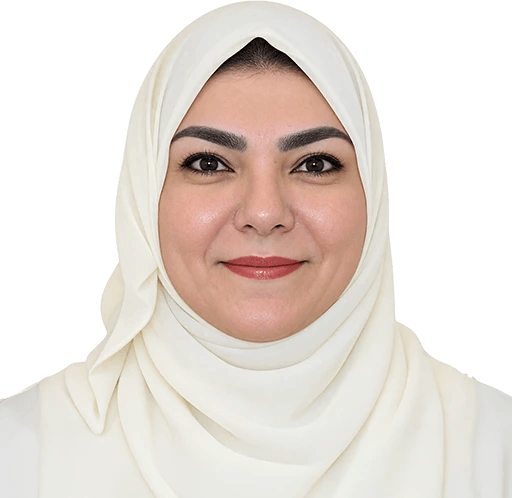
Dr. Abeer Mohammad Miqdad, MD is a Saudi Consultant Neonatologist and NICU specialist based in Riyadh, Saudi Arabia. She has developed a substantial clinical and academic career in neonatal medicine, with her professional work centered on the care of critically ill and premature newborns.
She is currently identified as a NICU Consultant at Security Forces Hospital, Riyadh, and has been affiliated with the hospital's Neonatology Unit for many years. Her name appears in multiple peer-reviewed publications as Abeer M. Miqdad, MD, with her institutional affiliation listed as the Division/Unit of Neonatology, Department of Pediatrics, Security Forces Hospital, Riyadh.
Security Forces Hospital, Riyadh, Saudi Arabia
Department: Pediatrics — Neonatology / NICU
Current role: NICU Consultant / Neonatologist
Her current consultant position is explicitly listed on the faculty profile of the International Pediatric Science Conference, while multiple scientific publications independently confirm her affiliation with Security Forces Hospital's Neonatology Unit.
Dr. Miqdad's published credentials identify her as MD. Her career has been concentrated in neonatal and pediatric medicine, particularly neonatal intensive care.
She has also contributed to the education and development of Saudi Arabia's neonatal-perinatal medicine workforce. A Saudi Commission for Health Specialties curriculum document for the Saudi Neonatal Perinatal Medicine Fellowship identifies Dr. Abeer Miqdad as one of the contributors to the fellowship curriculum.
This involvement demonstrates her contribution not only to clinical neonatal care but also to postgraduate medical education and specialist training.
Dr. Miqdad's documented professional and research activities indicate expertise in:
Dr. Miqdad has participated in research covering a broad range of neonatal and pediatric conditions.
Dr. Miqdad was a co-author of research examining the epidemiology of neural tube defects in Saudi Arabia. The study included investigators from the Neonatology Division at Security Forces Hospital and King Saud University.
She also contributed to a related review examining genetic, chromosomal and syndromic causes of neural tube defects, again through her affiliation with the Neonatology Division at Security Forces Hospital.
These publications demonstrate her involvement in multidisciplinary neonatal research involving congenital anomalies, genetics and perinatal outcomes.
Dr. Miqdad participated in research into hyperekplexia, microcephaly and abnormal brain development caused by novel ASNS mutations. The study was conducted through collaboration between neonatal medicine, pediatric neurology and clinical genetics teams in Riyadh.
She was also a co-author of research describing a novel syndrome of lethal familial hyperekplexia associated with brain malformation, involving the Neonatology Unit at Security Forces Hospital.
Dr. Miqdad contributed to a case report concerning a novel ABCA3 mutation associated with lethal neonatal respiratory failure. The research involved collaboration between pediatric/neonatal clinicians and genetic specialists in Saudi Arabia and France.
This work is particularly relevant to neonatal medicine because mutations affecting pulmonary surfactant pathways can cause severe respiratory disease in otherwise apparently healthy term newborns.
She was a co-author of the study “Infants of diabetic mothers: A cohort study,” published in the Saudi Medical Journal in 2014. The research examined neonatal outcomes and complications among infants born to diabetic mothers at Security Forces Hospital in Riyadh.
The study evaluated complications in infants of diabetic mothers compared with infants of non-diabetic mothers, contributing Saudi-specific clinical data to the field of perinatal medicine.
Dr. Miqdad has also contributed to national pediatric clinical guidance.
She was one of the authors of the Saudi Initiative of Bronchiolitis Diagnosis, Management, and Prevention (SIBRO), a national multidisciplinary initiative addressing diagnosis, management and prevention of bronchiolitis in children. Her listed affiliation was the Department of Pediatrics, Security Forces Hospital, Riyadh.
She subsequently contributed to the 2024 updated Saudi consensus on prevention of respiratory syncytial virus (RSV), again representing Security Forces Hospital.
Dr. Miqdad's involvement extends into specialist medical education. She was listed as a contributor to the Saudi Neonatal Perinatal Medicine Fellowship curriculum, developed under the Saudi Commission for Health Specialties.
This is an important professional contribution because the curriculum provides structured training for physicians pursuing advanced specialization in neonatal-perinatal medicine.
Dr. Miqdad has remained active in Saudi neonatal and pediatric scientific events.
She was listed as a speaker/session chair at the 3rd International Neonatology Conference Jazan 2026, where she co-chaired a session titled “Miscellaneous.”
She is also listed as a faculty member for the International Pediatric Science Conference, where her position is given as NICU Consultant, Security Forces Hospital, KSA.
The official Saudi Neonatology Society membership records also list Abeer Miqdad as a member of the Society.
Dr. Miqdad has progressed to consultant-level practice in NICU medicine at Security Forces Hospital, one of the major tertiary healthcare institutions in Riyadh.
She contributed to the Saudi Neonatal Perinatal Medicine Fellowship curriculum, supporting the education and development of future neonatologists in Saudi Arabia.
Her publications include investigations of rare and severe neonatal disorders involving ASNS and ABCA3 mutations, demonstrating involvement in multidisciplinary neonatal genetics and respiratory research.
She participated in studies on the epidemiology and genetic causes of neural tube defects, contributing neonatal expertise to multidisciplinary congenital-anomaly research.
Her participation in the SIBRO bronchiolitis initiative and the subsequent 2024 RSV prevention consensus represents a contribution to evidence-based pediatric respiratory care in Saudi Arabia.
Her work on infants of diabetic mothers and neonatal complications has contributed clinical evidence concerning high-risk newborn populations in Saudi Arabia.
She continues to participate as a speaker and session chair in Saudi and international pediatric/neonatal educational events, including the 2026 International Neonatology Conference in Jazan.
Saudi Neonatology Society (SNS)
Saudi Neonatology Society (SNS)